
Everyday care
Feeding
The ancestors of the Spanish Water Dog assisted shepherds and fishermen who fed them dry bread and leftovers. Despite such a poor diet, the Spanish Water Dog never seemed hungry. During the working day, he hunted small animals such as rabbits, birds and fish that he could catch in the field or in the water. In modern times, fortunately, he does not have to hunt anymore, because in the stores we have a huge selection of dog food. Of course, many of them contain chemical additives, which is why they are rejected by many breeders. The Spanish Water Dog would not develop such resistance to diseases if he absorbed so many preservatives from the diet. This dog tolerates various types of food, both wet and dry food. Some specialists recommend giving two meals a day, one from dry and the other from wet dog food and fresh: natural products mainly beef, chicken, rabbit, fish, vegetables and eggs. Fruits should also be offered, but as a separate meal, as they are digested and broken down in a different way. The puppy should also regularly receive fiber-rich bread. Giving two meals a day will benefit your dog in many ways.
Activity
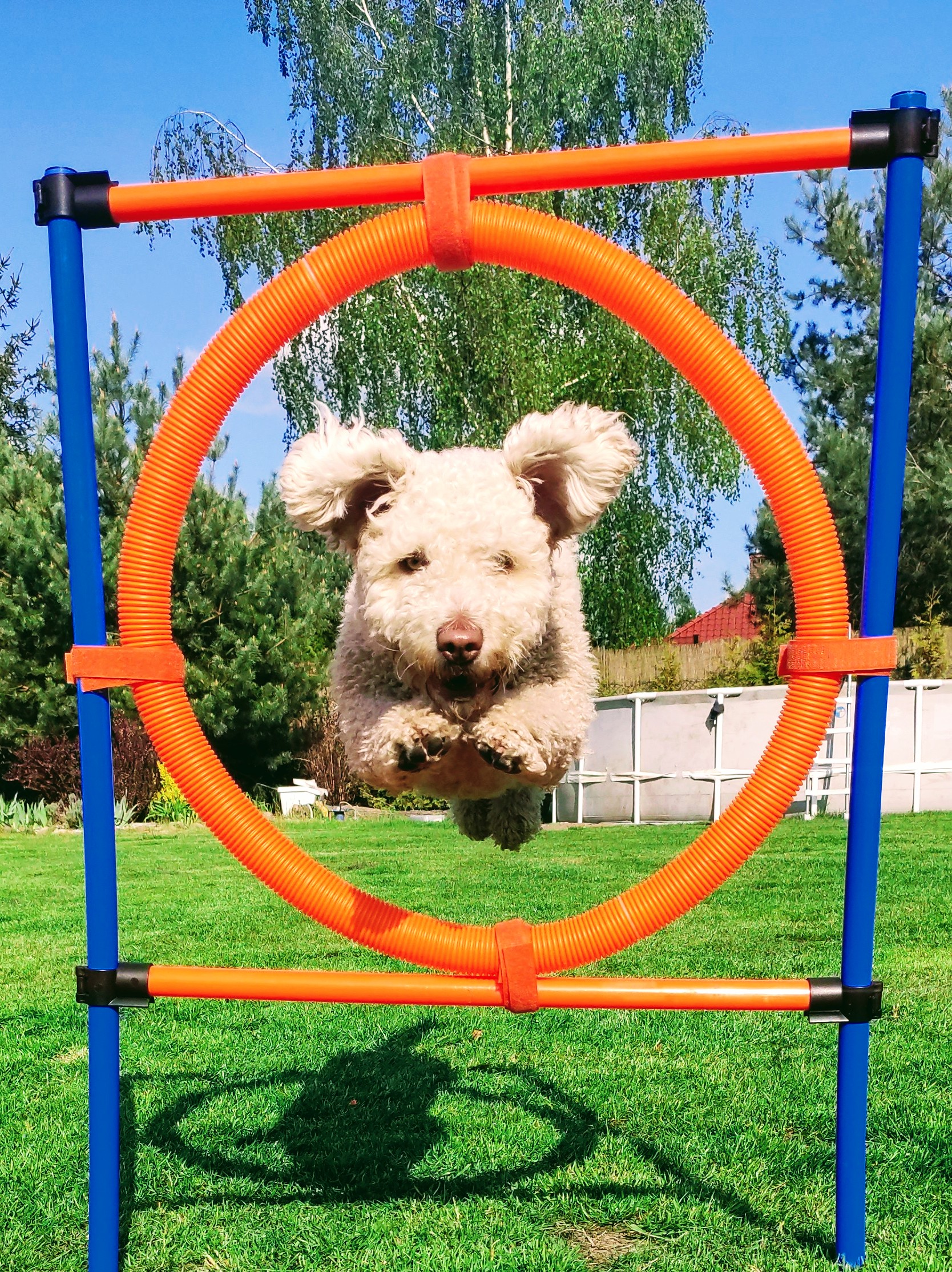
One of the most obvious features of the Spanish Water Dog is its vitality, agility and energy, which is why it cannot be condemned to a life of inactivity. The SWD loves to run especially in open areas like his ancestors many years ago, so he should receive a daily dose of movement. A wise owner will develop different ways to discharge energy, whether it be agility exercises, working at home or farm, running with sheep or other dogs, hunting, herding, etc., the choice belongs to you. In the city, you can sign up for obedience, agility or nosework training.
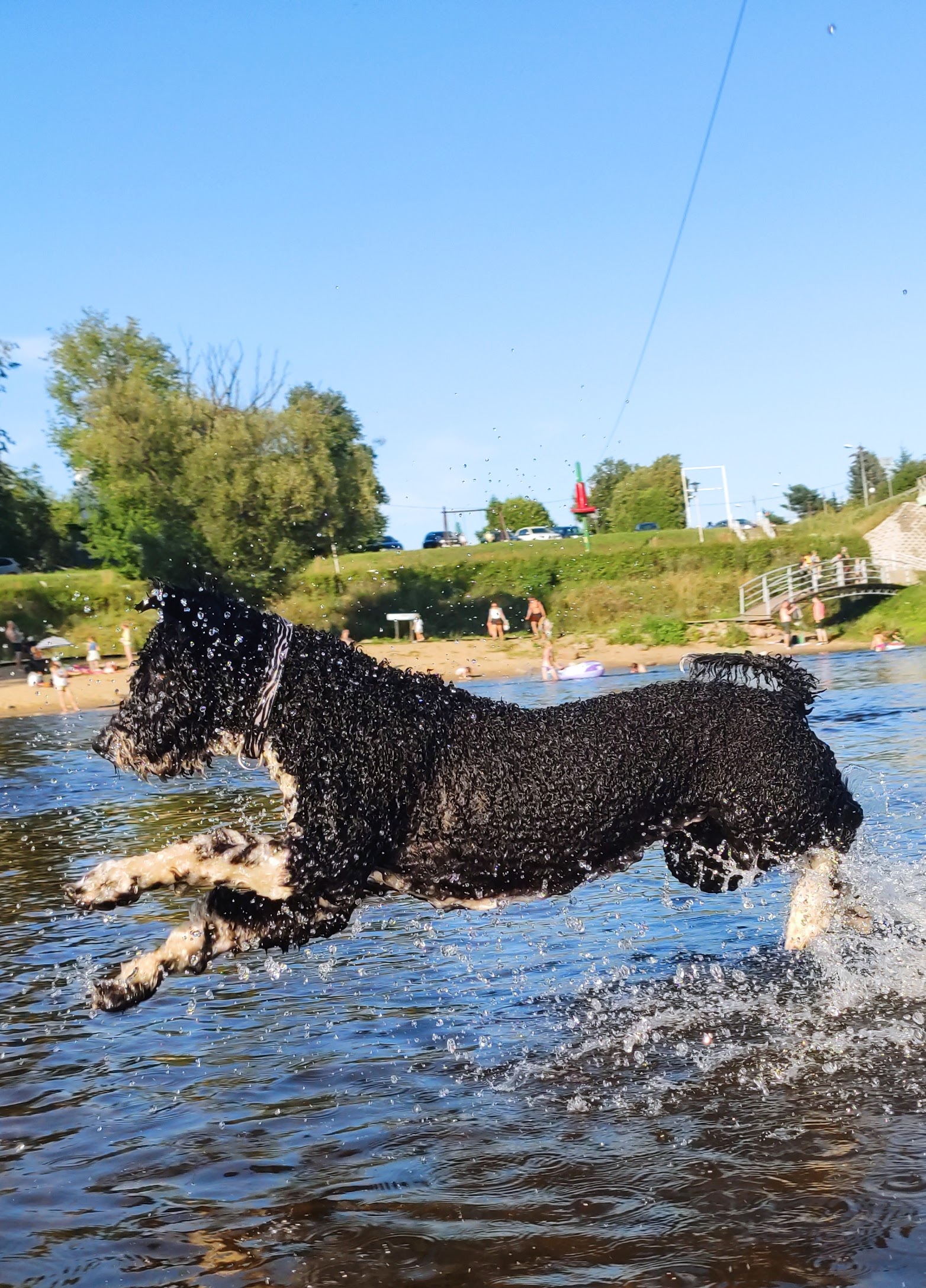
Our dog is called “water dog” and there is a great reason for this. He will use every opportunity to show his skills in the water. Regardless of whether it is a pond, a lake, the sea or a swimming pool perro de agua will delight in the water. You will be surprised how naturally this dog swims and dives! In northern Spain, this breed is called “fishing dog”. The SWD is trained to swim by a fishing boat and to pull out fish that have escaped from the fishing net.
The Spanish Water Dog needs daily activities to be happy. If you do not provide him with these activities, he will start looking for them on his own, he may also lose his natural joy and become lethargic. The dog likes to play with all family members is loud and playful which makes it a great partner for children who usually get tired much faster than him.
Coat
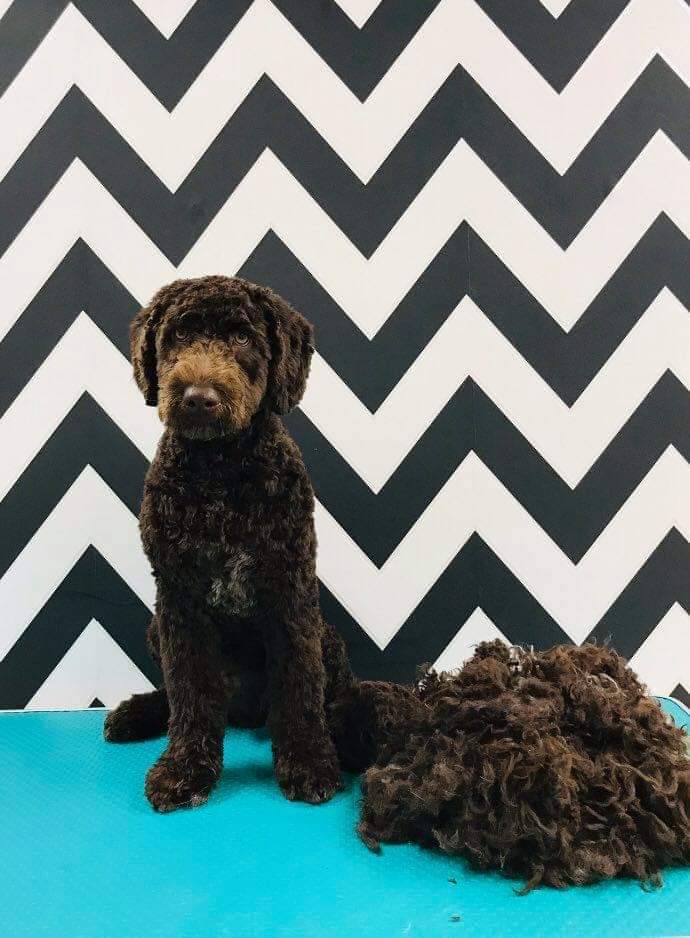
First of all, this dog has wool, not hair, and its grooming is much different from that of an “ordinary” dog. After birth, the coat of the Spanish Water Dog is very thin and woolly, therefore it should be shaved around 3 months of age. Later, the coat grows stronger and of better quality. carving in the coat and combing it is forbidden, so you should separate the curls with your fingers every day, working from the top to the bottom giving the coat the desired appearance. When you decide to grow a long coat, you must remember about its proper care, i.e. regularly checking the hair and separating the curls. Long fur when not well-groomed can cause great discomfort to your dog. If you do not plan it to have a long coat, you can regularly shave it, 2-4 times a year. As a standard for a SWD is shaving twice a year in April and September. Bathing should be done at least once every two weeks, especially when the dog lives at home (possibly in case of any necessity). Bathing a SWD is like washing a wool sweater, especially when its coat is longer. First, we soak the coat with warm water (NEVER hot!, because that makes the hair hard). Pour water from top to bottom until the whole hair is wet. If we want to maintain its nice appearance, we NEVER make “circles” with our fingers and do not abuse shampoo. If we do not find a proven specific for our breed, we can use shampoo for rough-haired dogs. The best shampoos are made of natural ingredients. Too frequent baths can lead the skin to the loss the natural protection, which in turn can lead to the occurrence of various diseases, e.g. dermatitis. In the case of a longer coat, improper care can lead to the development of a bad smell. Combs and brushes are not desirable. Using them can cause a deterioration in the quality of the coat, and the curl may lose its characteristic appearance.
Drying is very important. If your dog has the opportunity to take frequent baths, it is important to dry his coat. A wet coat attracts dirt and gets tangled easily. In the cold season, drying protects the dog from colds. On the other hand, a longer coat left to dry on its own can dry for up to several hours. Otherwise, if the dog lives in a warm place or it is hot season, then the dog can dry naturally. Reading all this, you may think that SWD care is engaging and complicated. So no! 🙂 You just need to know all this before he lives in your house. When you learn to care for your pet’s coat, you will have an extremely clean pet. The big advantage of a woolly coat is the absence of linen.
Eyes and ears
It is good to remove dirt from the eyes every day. This can be done, for example, with a slightly moistened cotton pad or tissue. Once a week, it is also worth reviewing the ears to check whether the secretion has accumulated there and the coat has not become entangled, creating tangles. To remove tangled hair from ears, you can use olive oil or a special liquid/powder designed for this purpose and available in grooming and pet stores. Moisturize the ear with it and then gently nibble the hair out of the ear. If you do not feel “up to” removing hair yourself, go to the groomer or veterinarian.
Teeth
It is important to take care of your pet’s teeth. Buy a brush and paste for dogs and brush their teeth regularly. A lot of dogs have tenedency to problems with gums or tartar precisely because of the lack of hygiene.
